
Pitch Black
A Mother’s Story of Loving a Child Through the Dark

There are things the body never forgets.
Like the sound of a hospital door locking behind you, while your six-year-old stays on the other side.
The devastation of knowing that behind that locked door your first grader is lying on a plastic mattress with a smother-proof blanket.
The agony of walking back through those hospital doors knowing this time your child isn’t walking out with you.
The numbness of the drive home — arms empty.
The crushing weight of pitch black.
“I sometimes feel like you don’t even care about me and I want to murder me. I feel like I want to die, but in a not hurtful way.”
Finn, age 5
My world tilted sideways.
The silence that followed felt deafening.
The body also doesn’t forget the absolute terror that floods through it when your five-year-old — the same kid who still needs snuggles to fall asleep — looks at you with absolute sincerity and says those words the day before he turns six.
Not theatrics.
Not manipulation.
Not attention-seeking.
Relief-seeking.
He wasn’t trying to escape life.
He was trying to escape feelings that felt too big for a five-year-old nervous system to hold.
Four months later, he was hospitalized for self-harm.
There is no parenting book that prepares you for signing intake paperwork for your child.
No breathing exercise that teaches you how to breathe through the devastation of walking out of hospital doors knowing your child isn’t walking out with you.
No script for explaining to your other child why their brother can’t come home.
No training for the way your nervous system fractures when you realize your child’s pain has grown bigger than your arms can hold.
People love to talk about resilience like it’s inspirational.
They rarely talk about the cost.
The hypervigilance.
The flinch response.
The way certain phrases echo years later.
The way “I’m fine” never lands the same again.
And yet.
There’s another part people rarely talk about.
The rebuild.
The slow rewiring.
Therapy rooms.
Co-regulation at 2 a.m.
Boundaries that feel cruel but save lives.
Choosing steadiness when your insides are shaking.
The belts earned.
The laughter returning.
The light creeping back in.
This isn’t a story about glorifying darkness.
It’s about refusing to pretend it doesn’t exist.
Because sometimes the dark is pitch black.
And loving your child through it anyway — when the dark feels like it might swallow you whole?
That’s the real strength.
He’s still here.
I’m still here.
Sometimes, survival is the victory.
Readers Note:
The inspiration and strength to right this blog came to me while Finn was preparing for his upcoming black belt testing. In martial arts, progress is marked by belts. Each one marks a stage of growth — lessons learned, struggles faced, skills slowly built over time.
Looking back now, Finn’s story unfolded the same way.
White Belt

But the darkness didn’t begin at that moment.
It didn’t begin in the hospital either.
Finn’s story — and mine — had been unfolding long before that night.
His emotional intensity started showing up when he was barely three years old. At first it just felt like big emotions. The kind people brush off as “strong-willed” or “spirited.” At the time, I honestly thought Everett would be the child who challenged me the most. His autism had shown itself early, and I had already started learning how to navigate the world of neurodivergence. I thought I already “knew” what advocacy looked like.
But Finn had other plans.
Somewhere along the way, my easygoing second child quietly looked at the universe and said, “Challenge accepted… hold my beer.”
For years we tried to understand how Finn’s brain experienced the world.
Therapy. Diagnoses. Medication trials.
Some things helped. Some things didn’t.
But by Christmas 2023, it was clear something had shifted. The cracks had widened so much they no longer looked like cracks at all — they looked like canyons.
Camo Belt
Christmas Break 2023
For most people, the holidays are a time of joy and connection. Excitement. Family traditions.
That December though… was a hard one.
I remember sitting with Finn while he was writing his letter to Santa.
Most kids ask for toys.
Finn asked Santa to fix him.
He said he wanted a “better life.”
When I asked what that meant, he told me he wished Santa could take away his ADHD and his anger — because he was so tired of always feeling out of control.
I remember sitting there with him and thinking the same thing I would later write in an email to one of his former therapists:
It breaks my heart that at six years old he already feels like he’s broken and needs to be fixed somehow.

A few weeks later, in early January, we had an incident that made it painfully clear things had reached a critical point — and that I was in over my head.
With absolute terror sitting heavy in my chest, I emailed every professional in Finn’s support network.
Therapists.
Psychologists.
Psychiatrists.
Anyone who might know how to reach him.
Because at that point, it felt like we were losing him.
And for a moment there, it felt like we had.
I didn’t know how to reach him anymore.
When I made that desperate plea to the members of his support team, his psychiatrist told us to discontinue the Strattera he had been taking — the last medication in his regimen that had any mood-regulating effect.
She said she was “curious to see what would happen” and that she would see us at our next scheduled appointment — in a little over three weeks.
Stopping that medication abruptly took an already volatile situation and turned it thermonuclear.
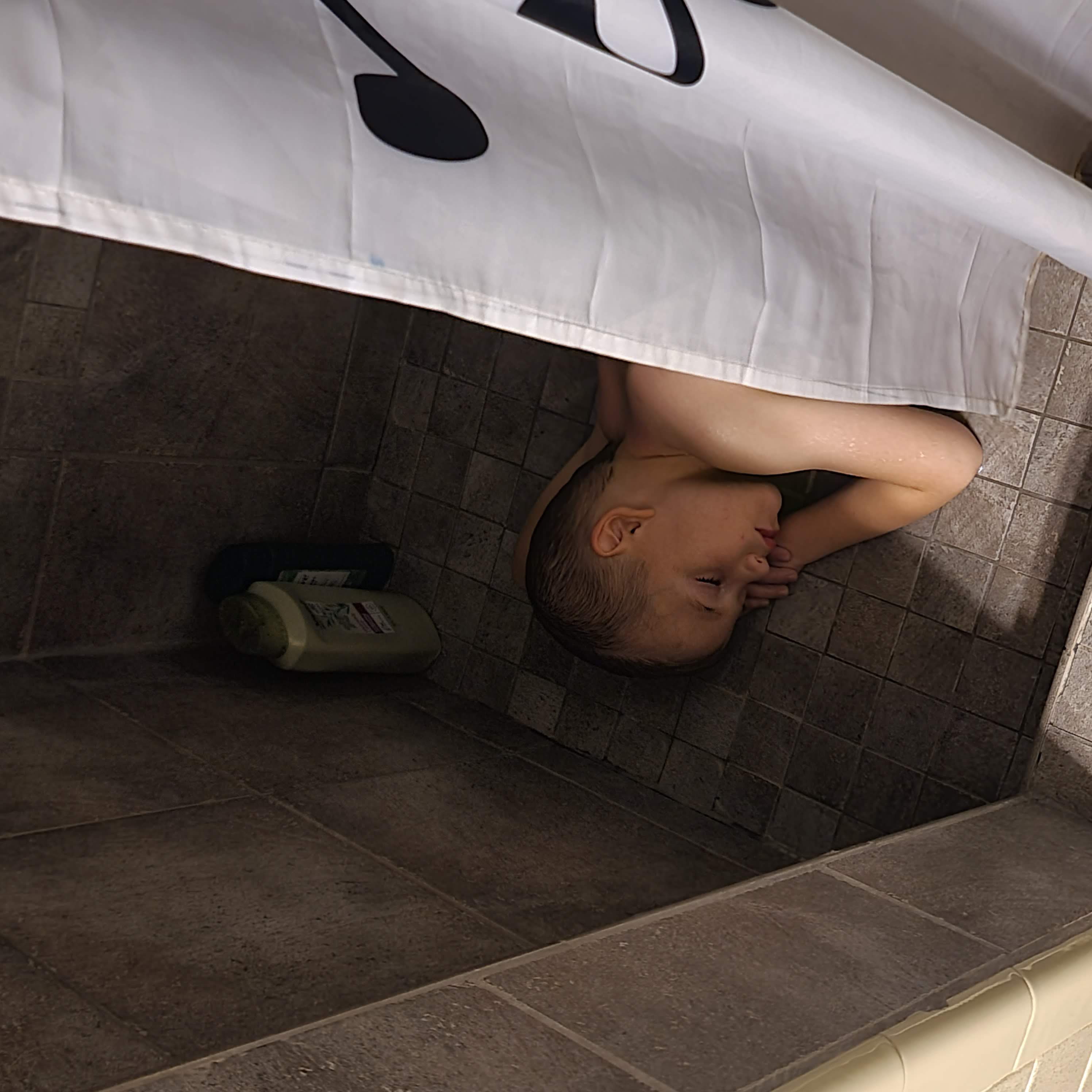
His sleep started falling apart.
His anger escalated.
Outbursts became more frequent.
More intense.
More unpredictable.
Our house stopped feeling like a home and started feeling like an emotional battlefield.
But the worst part wasn’t just how hard things had become for me.
It was watching Finn start to believe that nothing was ever going to get better. This was just his life.
When he was calm, he would try to explain it.
He told me the anger felt like it lived inside him all the time, just waiting to explode.
He said ADHD was “too hard.”
That he felt like he couldn’t control anything anymore.
That sometimes he didn’t think he could do this at all.
At six years old.
It was during one of those moments, I realized just how much he was suffering.
He looked at me and said:
“You made me feel like a bad person and like you weren’t my mom anymore. And that made me hate you and made me feel like you weren’t a safe person, and want to kill you. This is too hard. ADHD is too hard. I can’t do this anymore.”
This Isn't Normal
A few days later, I walked into my own psychiatrist’s office for what I thought was a routine medication appointment.
I sat on the small couch across from her chair — the same place I had sat many times before.
I started talking about how my medications were working, but how I felt like I might need an adjustment because of things happening at home. I told her it might be a good idea to increase my anxiety medication just to keep myself regulated enough to deal with everything.
It was important that I could regulate myself.
After all, I was also acting as a regulator for two other nervous systems — and it was getting harder and harder to do that.
She asked me what had been happening.
So I told her.
That Finn’s episodes had been getting worse.
About the anger.
The hopelessness.
The things he had been saying.
How he told me ADHD was too hard.
How he said he couldn’t control anything anymore.
How he had looked at me and said he didn’t think he could do this.
I told her about the medication changes.
About the decision to pull him off his last medication — and how much worse things had gotten since then.
At some point while I was talking, she stopped me.
And she said something that completely shifted my understanding of what was happening.
She looked at me and said:
“I want you to hear something very clearly right now. What you are describing isn’t normal. You’ve been living with this reality for so long that you can’t see how bad it’s gotten.”
And in that moment, everything inside me went very still. Because part of me already knew she was right.
When chaos becomes your normal, your brain learns how to survive it.
You adapt.
You push through.
You convince yourself that maybe this is just what life looks like now.
But hearing someone outside our house say it out loud made something click.
This wasn’t just a hard phase.
Finn needed help.
Immediate help.
And then she said something else.
“If this were my child, I would take him to Children’s.”
I left my appointment and got into my car.
Then I called Fred.
He didn’t answer.
So I sent him a message.
Call me. It’s important.
Then I started the car.
Almost without thinking, I began driving toward the kids’ school.
Somewhere in the back of my mind, I already knew what was about to happen. I was going to be pulling Finn out of school early. I knew Fred would trust my judgment once he heard what my doctor had said.
On the way, I called a friend whose husband worked as a doctor in that unit. I needed advice. Reassurance. Anything that might make the next step feel a little less terrifying.
But the truth was, the decision had already been made.
It was no longer a matter of if Finn would be going to Children’s.
It was a matter of when.
And honestly, taking him in when he wasn’t having an active episode was probably one of the best decisions we could have made.
When I picked Finn up from school, we sat in the car for a minute before pulling away.
I told him we were going somewhere to talk to some doctors. That they were going to help us figure out better ways to help him feel good in his body and in his mind again.
That this wasn’t a punishment.
We just needed better tools.
Better ideas.
Better help.
As we started driving, I started explaining more about where we were going and why. Something I told him that felt like common sense in the moment, but ended up becoming one of the most defining moments of his visit.
I told him that when we got there, it was incredibly important that he be completely honest with the doctors — because the only way they could help him feel better was if they knew the truth about what was going on inside his head.
He looked at me for a moment and asked,
“Even if it’s embarrassing?”
I told him yes.
Even then.
That doctors hear embarrassing things every single day. That their job wasn’t to judge him, but to help him. And that they could only do that if he gave them all of the puzzle pieces.
Something clicked.
He nodded.
Within minutes, we were pulling into the ER entrance at Children’s.
The Night Everything Changed
When we arrived, they began the intake process.
Because it was psychiatric intake, they asked him a series of very direct questions.
Questions no parent ever imagines hearing asked to their six-year-old.
“Have you ever thought about killing yourself?”
“No.”
“Have you ever tried to kill yourself?”
“No.”
Then the nurse asked another question.
“Have you ever thought about hurting yourself?”
Finn paused
Then he turned and looked at me.
“Even the embarrassing things, Mom?”
My heart clenched.
“Yes,” I told him quietly. “Even those.”
He turned back to the nurse.
“Yes.”
Then she asked if he had ever tried to hurt himself.
Finn took a deep breath.
“Yes”
Something inside me shattered.
When she asked how, he explained that sometimes when he felt stupid, he would punch himself in the head.
Because he felt like his brain was broken.
And in that moment I realized something that shook me to my core.
No matter how much I thought I understood what he was going through…
No matter how many therapy sessions we had attended…
No matter how closely I thought I was paying attention…
I didn’t know that.
My six-year-old had been hurting himself.
And I didn’t know.
It gutted me.
How could my baby be in so much pain that self-harm felt like an answer?
How could I not have seen it?
It was one of the worst moments of my life.
Waiting
After the intake nurse finished documenting everything, she told us to return to the waiting room until they were ready to call us back.
So we sat there.
In the emergency room waiting area.
Like it was any other afternoon.
Except it wasn’t.
People moved in and out around us. Phones rang. Nurses called out names.
But everything felt strangely quiet inside my head.
I kept replaying what Finn had just said.
Because he felt like his brain was broken.
That sentence echoed over and over, mixed with a cascade of questions: How did we get here? How did he even think/know to do something like that? How could I not know? Just HOW.
Eventually a nurse came out and called Finn’s name.
She told us they were ready for us in the psychiatric ER area — a separate section from the regular emergency department.
And just like that, we crossed an invisible line.
We followed her through a set of doors and down a hallway that felt far longer than it probably was.
At that point, I still didn’t know exactly what was going to happen next.
But somewhere deep down, I knew this wasn’t just a conversation with a doctor anymore.
Something bigger was about to happen.
Waiting...Some more
The psychiatric ER area was surprisingly… quiet.
Not warm exactly.
More like carefully neutral.
The hallway was lined with small rooms, clearly designed for kids, each one visible through observation windows where attendants sat spaced along the corridor, watching several rooms at once.
They led us halfway down the hall and into one of them.

The room itself was simple.
A built-in bed with a plastic mattress.
A small couch pushed against the wall.
Smooth cabinets with locks on each door — cabinets designed to lock away anything that couldn’t be left within reach.
A place for his everyday clothing.
A place for any electronics — including my phone.
A place built to lock away the last vestiges of the normal world.
Everything felt intentional.
Not sterile like a typical hospital room.
But clearly designed so that nothing in it could hurt a child having the worst day of their life.
At the time, I didn’t realize that room was the last place I would sit with Finn before walking out of a hospital without him.
Red Belt
An attendant’s job seemed to be keeping kids occupied while they waited.
For Finn, that meant an endless stack of coloring pages.
So while doctors and nurses quietly decided what came next for our family, my six-year-old sat on that couch coloring.
And then we waited.
And waited.
And waited some more.
A few different doctors and nurses cycled in throughout the evening, each asking their own set of questions.
Some of them directed to Finn.
Some of them directed to me.
The hours blurred together.
At some point Lindsey showed up and joined us, which helped more than I can probably explain.
When you’re sitting in a psychiatric ER with your six-year-old, the presence of someone who simply cares enough to sit beside you matters more than words.
Eventually we ended up eating dinner there.
And for a little while, the room was peaceful.
Somewhere in the middle of all of it, Finn started to figure out how the system worked.
He realized that if he asked the attendant for specific things — coloring pages, drinks — the guy would just… bring them.
You could practically see the gears turning in his head.
Finn may have a lot of hurdles, but intelligence definitely isn’t one of them. In fact, I frequently joke that he’s my “evil super genius.”
So after testing the system a few times, Finn decided to aim a little higher.
He asked for ice cream.
And when the attendant came back a few minutes later holding exactly that, Finn looked very pleased with himself.
Like he had just pulled off some kind of elaborate heist.
And honestly, I laughed.
Because even in the middle of everything, he was still very much Finn.
A little while later, while he was polishing off his ice cream, he asked me a question that caught me completely off guard.
“Do they do birthday parties here?”
At first I thought he meant if they celebrated birthdays for kids who happened to be admitted around their birthday.
So I asked him to clarify.
He looked at me and said no.
He meant could he have his next birthday party there.
I remember laughing at the sheer absurdity of it.
Because of course.
Only my child would want a grippy sock birthday party.
That moment of absurdity would be one of the last lighthearted moments before the night changed again. And honestly, I still love that even in the middle of the worst night of my life, he still managed to make me laugh.
Reaching Pitch Black
Eventually one of the doctors asked if he could speak with me in private for a moment.
We stepped out into the hallway.
Not far from Finn’s room.
Close enough that we could still see each other if we needed the visual reassurance.
Far enough away that he couldn’t hear what the doctor was about to say.
Because things had already escalated to self-harm, the doctor believed the safest option was to admit Finn for inpatient care.
They wanted to keep him there so they could provide intensive therapy and closely monitor how he responded to medication changes.
With outpatient care, medications are typically adjusted and then monitored over several weeks before the next follow-up.
But inpatient care allowed them to make adjustments much more quickly in a controlled environment.
The goal wasn’t just stabilization.
The goal was to send Finn home with something we hadn’t had in a while.
Hope
Hope that the medication would help.
Hope that the constant anger and emotional chaos he had been living inside might finally quiet down.
And as the doctor spoke, a single thought kept running through my mind.
Shit… it really is this bad.
Because hearing it said out loud — hearing someone else confirm what I had been slowly realizing for weeks — made everything feel painfully real.
Relief.
Fear.
Guilt.
Devastation.
All of it hit at once.
Parenting manuals never cover the moment when you have to decide whether your child needs a psychiatric hospital.
And at the time, I wasn’t sure if I was making the right decision.
But deep down, I also knew something else.
I couldn’t keep pretending everything was okay.
He was right.
Finn needed help that I couldn’t give him on my own.
THE SELF-HARM CHANGED EVERYTHING...
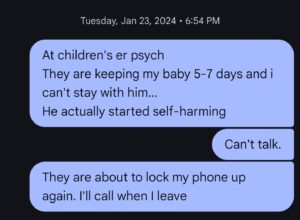
Sometimes loving your child means trusting strangers to hold them while you step back and hope they can reach the places you couldn’t.
Admission
Once the decision was made, everything suddenly became very procedural.
Forms.
So many forms.
It felt like I was filling out nine million pieces of paperwork.
Medical history.
Emergency contacts.
Authorization forms.
Visitor policies.
Phone procedures.
Code names.
Lists of what I was and wasn’t allowed to bring him.
Pages and pages of information.
Somewhere in the middle of all of it, numbness started to take over.
It was overwhelming.
By the time I finished everything, it was close to midnight and Finn had already been taken to the secured children’s ward.
He was asleep.
Which meant I didn’t get to see him again.
I didn’t get to give him one last hug.
I didn’t get to tell him how much I loved him or would miss him.
I didn’t get to tell him it would be okay.
I just had to leave.
Arms empty.
My heart left behind that locked door.
And for a second, I just stood there, unable to force myself to walk away.
Staring at the handle, like if I opened it again, I might still find him on the other side.
Pitch Black
I don’t remember the drive home that night.
Not really.
I mostly just remember small vivid details.
The sound of the sliding doors as I exited the hospital.
The way the valet attendants smile quickly crumbled into sympathy as he scanned my face while handing me my keys.
The surreal feeling that this wasn’t my life — almost like an out-of-body experience.
How I was amazed that I still had tears left to cry.
And hollow.
So hollow.
Like something essential had been scooped out of me.
All I wanted was some way to numb the pain.
Instead, I called my friend Jami.
And I cried.
Again.
Hard.
At the time she felt like the only person who truly understood what I was going through. She had walked a similar road with her own child, and somehow, she knew exactly what to say — and when to simply sit in the silence with me.
I still don’t think I would have left the hospital that first night if Jami hadn’t reminded me of something important.
Everett still needed me too.
And she was right.
Because sitting in that hallway forever wouldn’t help either of my boys.
Navigating The Pitch Black
I honestly don’t know how I would have navigated that week without Jami.
The next day she showed up without hesitation.
When I felt like I could barely function, Jami stepped right into the trenches beside me.
She helped me sort through the paperwork.
She helped me shop for the things Finn was allowed to have.
There were rules about everything:
- No strings.
- No hoods.
- Slip-on shoes only.
- Nothing sentimental in case items got mixed up.
Information was coming at me faster than my brain could process it.
But Jami kept me moving forward.
She even simplified the paperwork into one list with the most important details highlighted.
We gathered everything Finn needed from the checklist she created — and a few extra things we hoped might make his stay a little easier.
It wasn’t just Jami.
Other people stepped in too.
My mom made sure she could call Finn and be there for his first visitation.
Friends sent encouragement and offered to watch Everett while we visited Finn.
Kids made drawings for him.
Little reminders that we weren’t completely alone in this.
Even though everything still felt heavy.
Overwhelming.
Blurry.
After Finn was admitted, I wasn’t allowed to see him again for over 48 hours because of the visiting schedule.
48 HOURS
And during that time, it felt like I was dying.
The only relief I had came in small fragments — updates from the doctors and brief phone calls with Finn.
Which sounds comforting in theory…
But anyone who has ever tried to have a meaningful conversation with a six-year-old over the phone knows how that usually goes.
Still.
Hearing his voice was enough to keep me breathing.
What surprised me most was what the staff kept telling me.
Finn was… okay.
More than okay, actually.
They told me he was thriving there.
One of the nurses even laughed while on the phone with me, saying Finn had just wandered into her line of sight and — in typical “Finnangian” style — was dancing around the unit like he was their personally selected entertainment for the day.
He also made a very important discovery that he was eager to share with me:
Popcorn not only existed there — he was allowed to have it every night.
Which, according to him, was a major selling point.
The therapist told me that at first he had seemed confused about why he was there.
But once she started asking him questions about how he had been feeling — about the anger, about feeling out of control — he suddenly understood why he was there.
And he looked at her and said, excitedly:
“Oh… you’re here to fix my brain!”
It was one of those moments that was somehow heartbreaking, funny, and hopeful all at the same time.
Because even at six years old, Finn already understood that something inside his brain didn’t feel right.
And that maybe — just maybe — someone there could help.
Meanwhile I was back at home trying to function like a normal human being.
Answering messages.
Safety proofing our house.
Taking care of Everett.
Trying to keep the world moving.
But inside I was counting the hours until I could see my child again.
And just when it felt like I could barely keep everything together…
The insurance company started pushing back.
Because of course it did.
While we were still trying to stabilize Finn’s medications, they began questioning whether they would cover them at all.
Then they started pushing back about fully covering his hospitalization.
At one point the doctor warned me that our insurance might even force them to discharge Finn from inpatient care after only three days if he didn’t have another “incident,” even if he wasn’t medically stabilized yet.
Three days.
Three days to stabilize a six-year-old whose nervous system had been spiraling for months.
I remember staring at the message and thinking the same thing I texted a friend at the time:
This fucking healthcare system can shove it.
Because moments like that make it painfully clear just how fragile the safety net really is — and how little these insurance companies care.
Even when it comes to a six-year-old who was self-harming.
Around that same time, Fred started questioning whether inpatient care was the right decision.
At one point he asked me,
“Do you feel like Finn being at the hospital is effective? I feel like he is just on a very, very expensive vacation and it might be better to get him back home.”
I remember staring at that message for a moment before replying.
I realized in that moment, I did want him there.
Even if every day we were apart felt like it was slowly killing me.
So I replied:
“Actually I really do feel like it’s effective. I just got off the phone with the doctor and she told me she saw Finn working with the therapist. They were talking about how to identify his triggers because he was saying he felt like everything made him explode and feel sad, embarrassed, and stupid.”
Because for the first time in a long time, it felt like someone was finally helping him make sense of what was happening inside his own brain — instead of just reacting to the explosions and punishing him for them.
And when your child is drowning emotionally, the last thing you want to hear is someone wondering if the lifeboat is also full of holes.
Seeing Finn
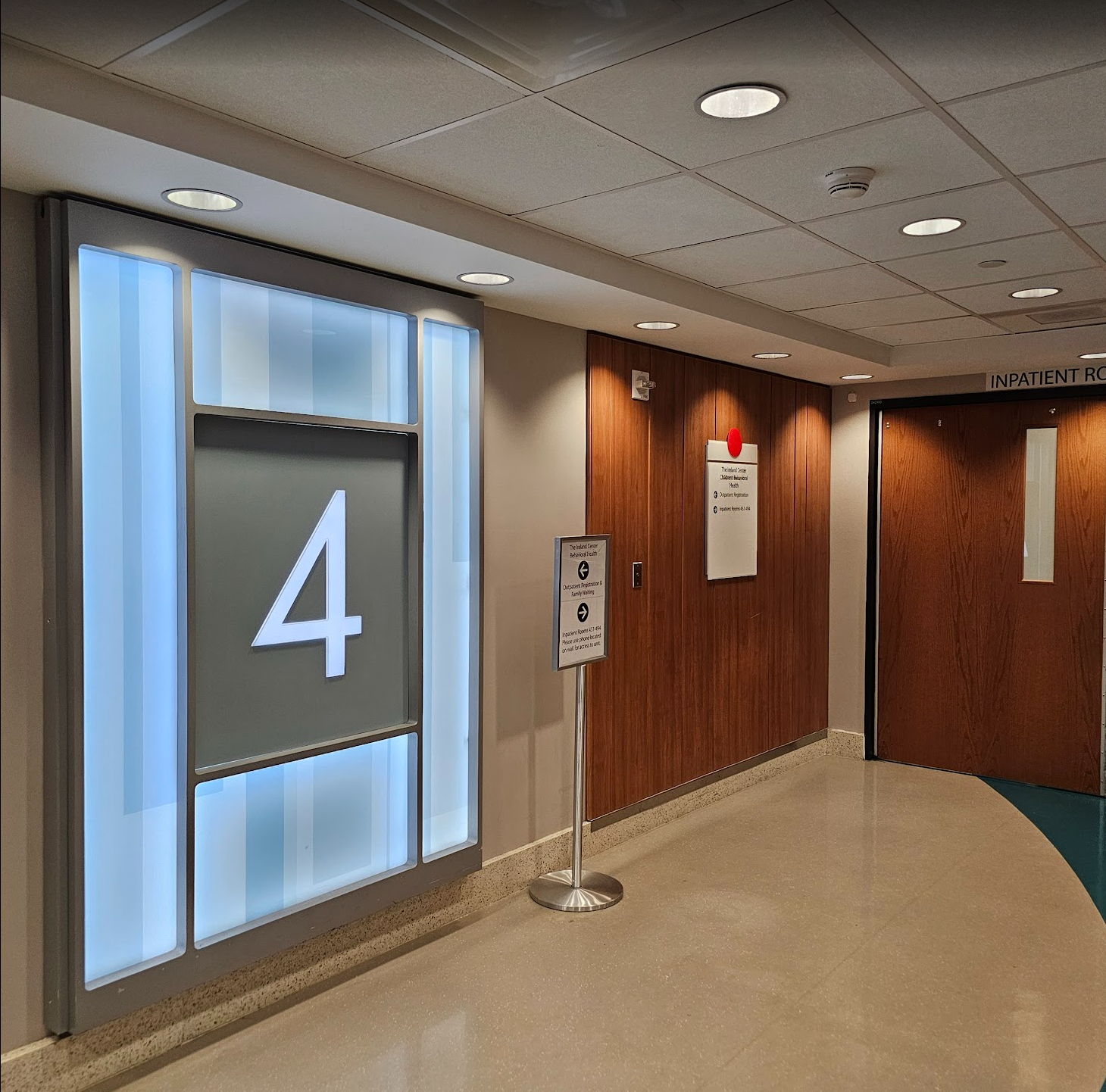
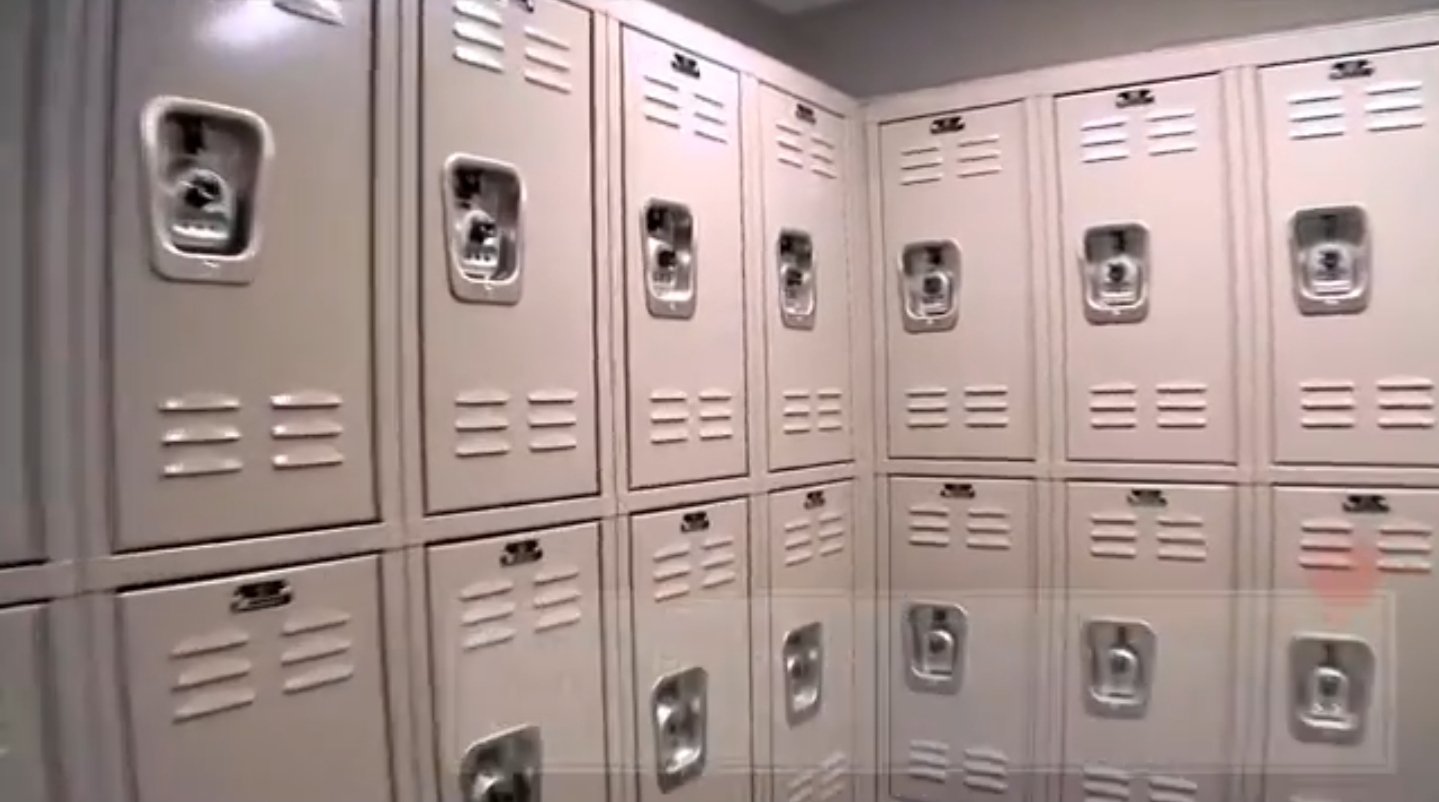
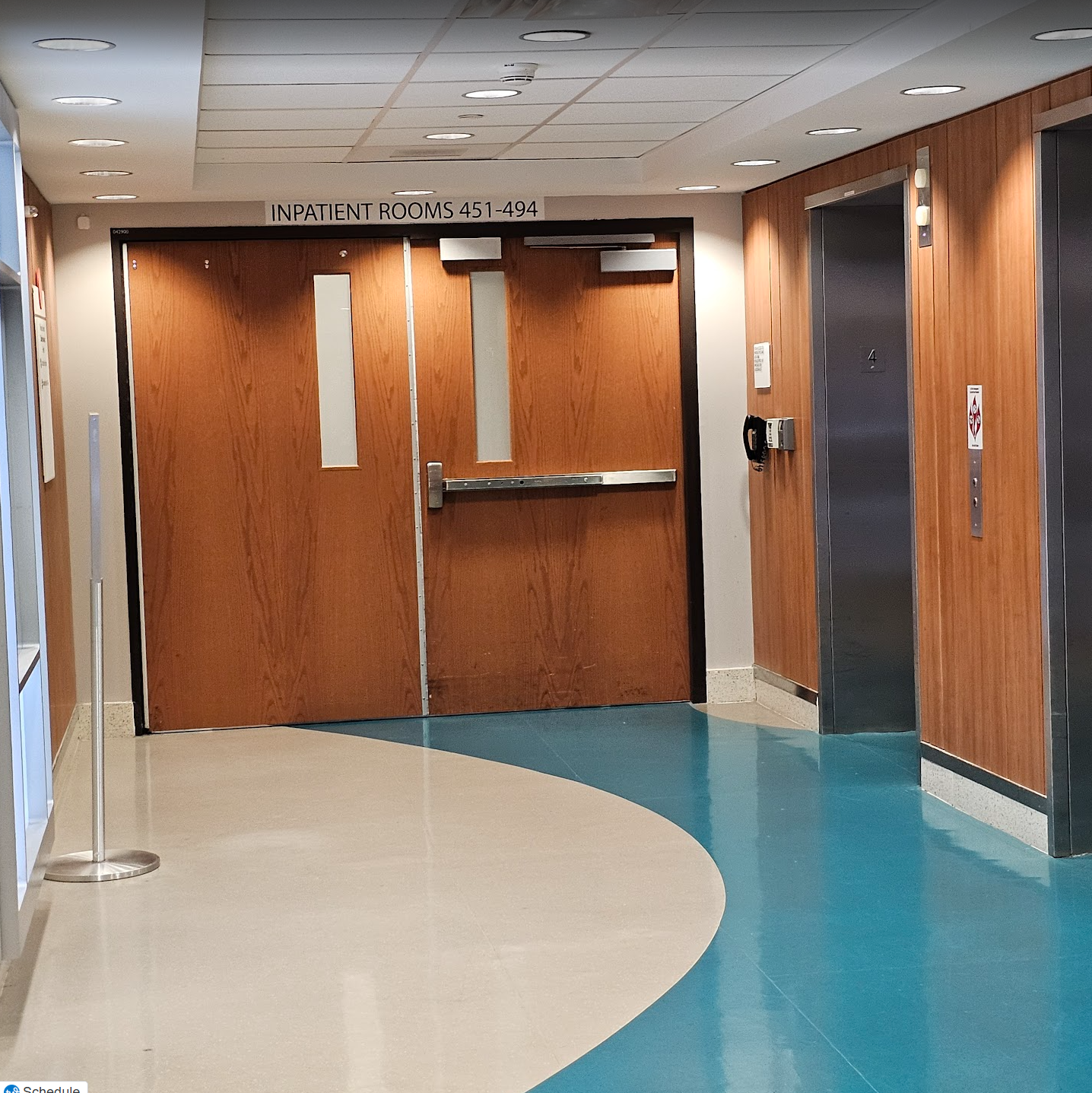
When it was finally time for our first visit, Everett stayed with my best friend Jenn while Fred, my mom, and I drove to Children’s.
Even walking into the building felt surreal.
Before entering the ward, they had us place everything into small lockers. Phones, keys, anything not allowed inside. Every item we brought for Finn was inspected carefully to make sure it followed their safety guidelines.
Then they opened the doors.
And suddenly we were inside the inpatient unit.
What struck me first was how… normal Finn seemed.
He wasn’t scared.
He wasn’t upset.
If anything, he seemed almost excited to show us around.
At one point he even called it his “special hotel.”
Part of me felt relieved seeing him that calm.
Another part of me felt like my brain couldn’t reconcile what I was looking at.
Because this was still a psychiatric ward.
And this was still my six-year-old child living inside it.
I had brought something with me that day — a little “happy book” I made for him.
Inside were photos of people who loved him, drawings/notes from family and friends, and reminders of moments when he had been proud of himself.
Things that proved his brain wasn’t broken.
That he wasn’t broken.
We flipped through it together and I could see the way it lit him up.
For a little while, we just sat together.
We played cards.
He showed me the stack of coloring pages he had made.
It felt strangely normal…yet completely abnormal at the same time.
At one point, he looked at me very seriously and asked if he was “really super good” and promised to “try his hardest” to control his emotions, would he be allowed to come home with us that night.
It took everything in me not to cry right there in front of him.
Because the truth was, the doctors weren’t ready to send him home yet.
The goal wasn’t just to stabilize him for a moment.
The goal was to send him home with hope instead of worry.
They needed time to watch how the new medications worked before it was safe to discharge him.
After explaining that to Finn, he thought about it for a minute.
Then he asked another question.
What if the medicine stops working again?
Do I have to come back?
I told him something that I hoped with my entire heart would be true.
That as long as he told me how he was feeling — as soon as he started struggling — we would find a way to help him before it ever got that bad again.
Then we went back to playing cards for a while.
And for a few minutes, it almost felt like everything was normal again.
But visiting hours in places like that move fast.
Far too fast.
Before I knew it, it was time to leave.
And once again I had to walk away from my child.
Arms empty.
AGAIN.
My heart was still on the other side of that locked door.
I didn’t even make it out of the hospital before the sobbing started.
I slid down the wall in the hallway and just… cried.
The kind of crying that comes from somewhere so deep it feels like it might break you.
My mom helped me pull myself back together.
Eventually I forced the mask back on.
Because Everett was still waiting for us.
And life — somehow — was still moving forward.
Blue Belt
Eventually Finn was discharged and allowed to come home.
Exactly seven days after he had been admitted.
But leaving the hospital didn’t mean the hard part was over.
In many ways, it was just the beginning.
Because healing a nervous system that had been living in constant chaos doesn’t happen overnight.
The next year would be filled with medication changes, endless therapy appointments, school meetings, and more moments of uncertainty than I can count.
Progress came slowly.
Sometimes painfully slowly.
But little by little, we started to see something we hadn’t seen in a long time.

Hope
Setbacks
But even with the right tools, healing wasn’t linear.
There were still hard days.
Still setbacks.
Still moments where it felt like we were back in the emotional battlefield we had just fought so hard to escape.
But slowly — almost imperceptibly at first — things began to shift.
Little things.
Moments where Finn would stop and take a breath instead of reacting immediately.
Times where he could pause and think about what he was feeling before the anger took over.
His emotional awareness was incredibly advanced for his age.
Which was both a blessing and a curse.
A blessing because he could articulate what was happening inside his brain.
A curse because understanding it so well also meant he could feel the weight of it.
The first major hurdle came almost immediately.
Before Finn could return to school, the district required a re-entry meeting.
Sitting in that room with administrators, counselors, and nurses discussing my six-year-old’s psychiatric hospitalization felt surreal.
Especially because this wasn’t the first time I had asked for help.
Months before the hospitalization, I had already reached out to the school counselor asking what resources might exist for a child like Finn — a bright kid who could mask well in short bursts but struggled deeply once he felt safe enough to fall apart.
At the time, we had been told he didn’t qualify for formal accommodations.
But after the hospitalization, the conversation suddenly shifted.
Part of me understood the reasoning.
Part of me worried if sharing so much about Finn’s hospitalization with the school was the right decision. (I still struggle with this sometimes)
Part of me couldn’t shake the feeling that the meeting existed as much to protect the system as it did to protect my child.
Still, it opened the door to additional resources.
And when you’re raising a child whose nervous system is fighting itself every day, you learn to accept support wherever you can find it.
The Blink-182 Moment
10 days after his hospitalization, we were driving home from his first tournament, and a song came on the radio.
“Stay Together For The Kids” by Blink-182.
When it ended, Finn asked if I could play it again.
I remember asking him why, because I couldn’t quite understand why my six-year-old was suddenly “really feeling” a song about divorce.
He told me to just play it again.
That he couldn’t explain it without hearing it.
So I did.
As the song played, he started asking me to pause it in different places.
“This part,” he said.
“It’s not right.”
Then another line.
“Rather than fix the problems, they never solve them.”
Then another.
“If this is what he wants, and it’s what she wants, then why is there so much pain?”
With each lyric he explained how it related to what he had been feeling inside his own brain.
How something inside his brain felt not right.
How it felt like nothing was fixing the problem.
How “fixing his brain” was what he wanted.
What I wanted.
What everyone wanted.
And how much pain that struggle had caused.
I don’t think I will ever hear that song again without thinking about that moment.
About how much pain my six-year-old must have been carrying.
But also about how deeply he understood what he was going through.
The Long Middle
After Children’s, the phrase “I’m fine” stopped meaning what it used to.
Before, it meant exactly that.
Now it meant I needed to listen more carefully.
Was his voice tight?
Was he avoiding eye contact?
Was his breathing different?
I started noticing things most people would never think twice about.
A pause that lasted a little too long.
A door shutting harder than usual.
The quiet that sometimes followed an ordinary afternoon.
Because once you’ve watched your child’s nervous system spiral that far…
your own nervous system learns to stay on guard.
The rest of that year was a blur of therapy appointments, medication adjustments, and constant trial and error.
And Fear.
Fear that one little misstep would land us back at Children’s.
Fear that I was going to miss a major red flag again.
Fear that I wasn’t doing enough — and worry that it might never be enough.
The only thing I knew with absolute certainty was that taking him into Children’s when he wasn’t in the middle of an episode was the right call.
He even asked almost a year later “when he could go back to that hotel where other people took care of him?”
Medication wise, it was still an uphill battle.
Some medications helped a little.
Some helped for a while and then stopped working.
Others made things worse.
Eventually I discovered something called Matthew’s Protocol, which led us to try a different medicinal approach that finally seemed to give Finn’s brain the support it needed.
It took until December 2024 to finally find the medication combination that gave Finn’s brain some peace.
Medication was only one of the tools.
But combined with everything else he was learning, it finally gave his brain the support it needed to figure out how to use those tools.
By May 2025, we realized that his meds were working, and the last piece was him needing a stronger stimulant.
And while we are aware that he will need things changed as he grows, seeing how he can be with medication helping him maintain full regulation was HUGE.
It finally felt like we were close to assembling the master puzzle, or at the very least were using the correct pieces.
Recommended Black Belt
Healing rarely happens in dramatic moments. Sometimes it shows up quietly, when you least expect it.
Districts 2025
By the time the next district tournament rolled around, a lot had changed.
Finn had spent a full year rebuilding himself.
Therapy.
Medication adjustments.
Learning how to recognize the early warning signs inside his own brain.
Moments when you could see him trying.
Trying to slow himself down.
Trying to breathe — eyes closed, fists clenched..
Trying to stop the tidal wave before the anger took over.
Little by little, the explosions became less frequent.
The recovery wasn’t perfect.
But it was real.
And honestly… I don’t think I realized just how far he had come until that night.
After the tournament, the team gathered at a Mexican restaurant to celebrate and announce the final placements.
The rings that Finn had competed in were some of the hardest ones at the tournament.
They were also huge.
Despite that, he had actually done incredibly well.
He placed third in several of the individual rings.
But because of how the brackets were structured, he didn’t advance to compete for an overall title.
It wasn’t until our team dinner later that night, that the cracks started to show.
And they didn’t show where you would have expected it.
During dinner they were announcing the results from the day-who won what title and medaled.
I glanced over at him.
And the second I saw his face…
My stomach dropped.
He looked devastated.
In an instant my brain time-traveled straight back to Children’s.
That same cold panic flooded my chest.
The same thought slammed into my head.
This is it.
This is where the dam breaks.
Before anyone noticed, I quietly stood up and slipped away to the bathroom.
And the second the door closed behind me, I lost it.
There I was — a grown adult sobbing in the bathroom of a random Mexican restaurant in Georgia — while a large group of people at the table were probably wondering where I had disappeared to.
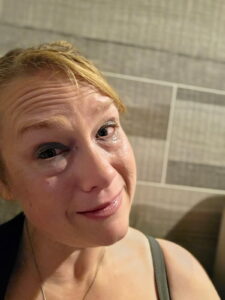
My phone started buzzing.
Friends checking on me.
Making sure I was okay.
Because they knew.
Being a parent in those moments is complicated.
I truly was happy for the other kids. I love them. I’m proud of them.
But I also knew the storm Finn had lived through the year before.
And I was bracing myself for the fallout.
Part of the reason my brain went straight to panic was because I had seen this moment before.
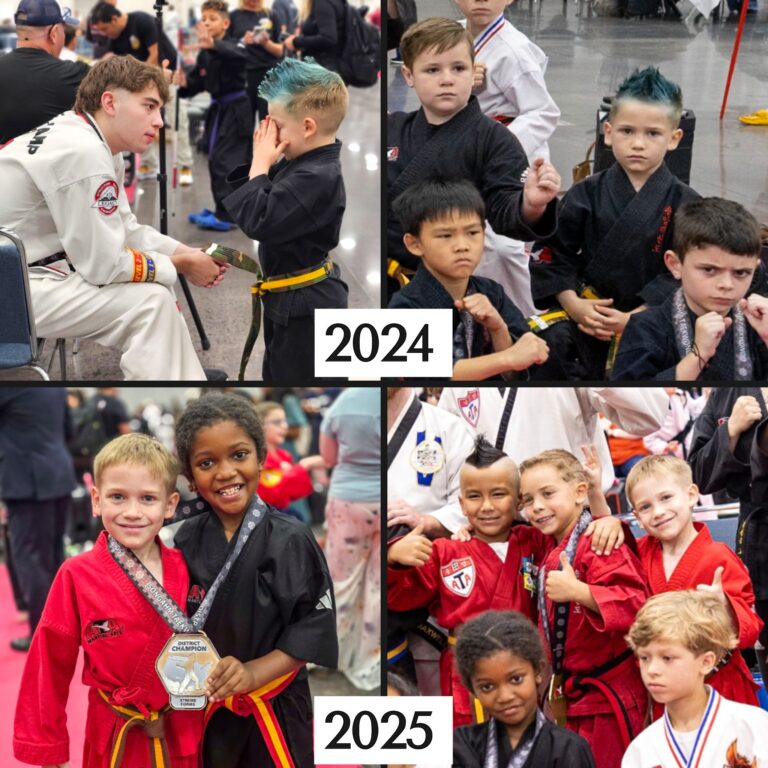
Last Districts in June 2024 — Finn had taken the loss hard.
Really hard.
At the time his nervous system was still raw from everything we had been through.
Disappointment didn’t just feel like disappointment.
It felt like failure.
Like proof that something inside him was still broken.
So when I saw that same look cross his face in 2025, my brain assumed we were about to relive that moment all over again.
I didn’t know if he could survive a second year of crushing disappointment.
What I didn’t realize yet was that Finn had spent an entire year learning how to carry those feelings differently. He had medication that was truly working.
It took me almost fifteen minutes before I could pull myself together enough to go back out.
Mask back on.
Game face in place.
Because sometimes that’s just part of the job.
Being a mom means holding yourself together long enough to help your kid hold it together too.
I left the bathroom and my eyes immediately found Finn.
Except, the Finn I found wasn’t crying.
He was laughing.
And while I knew he was bummed about not getting a title, you could tell he was mostly just happy for his friends.
Well his friends and cheese dip that is.
And that’s when I realized — in the wise words of my bestie, Taylor Swift:
It’s me, hi
I’m the problem, it’s me
I had spent so long taking care of Finn’s mental health that I had forgotten about mine.
Finn wasn’t nearly as traumatized by his stay at Children’s as I was.
Children are more adaptable and resilient than we give them credit for.
Adults on the other hand, aren’t.
I realized then that the light-hearted jokes I made about having PTSD weren’t really jokes.
I was actually struggling with it.
And I knew then that I also needed to find a way to heal myself.
Looking back now, I realize that healing rarely happens the way we expect it — in easily identified dramatic moments. It shows up quietly, when you least expect it.
I had spent so much time watching Finn, waiting for the next crack in the dam, that I didn’t realize the water had already started to recede.
He had been quietly learning how to carry his emotions differently.
Learning how to pause.
Learning how to breathe.
Learning how to “levitate.
And somewhere along the way, while he was rebuilding himself… I forgot that I might need to rebuild a few pieces of myself too.
Black Belt
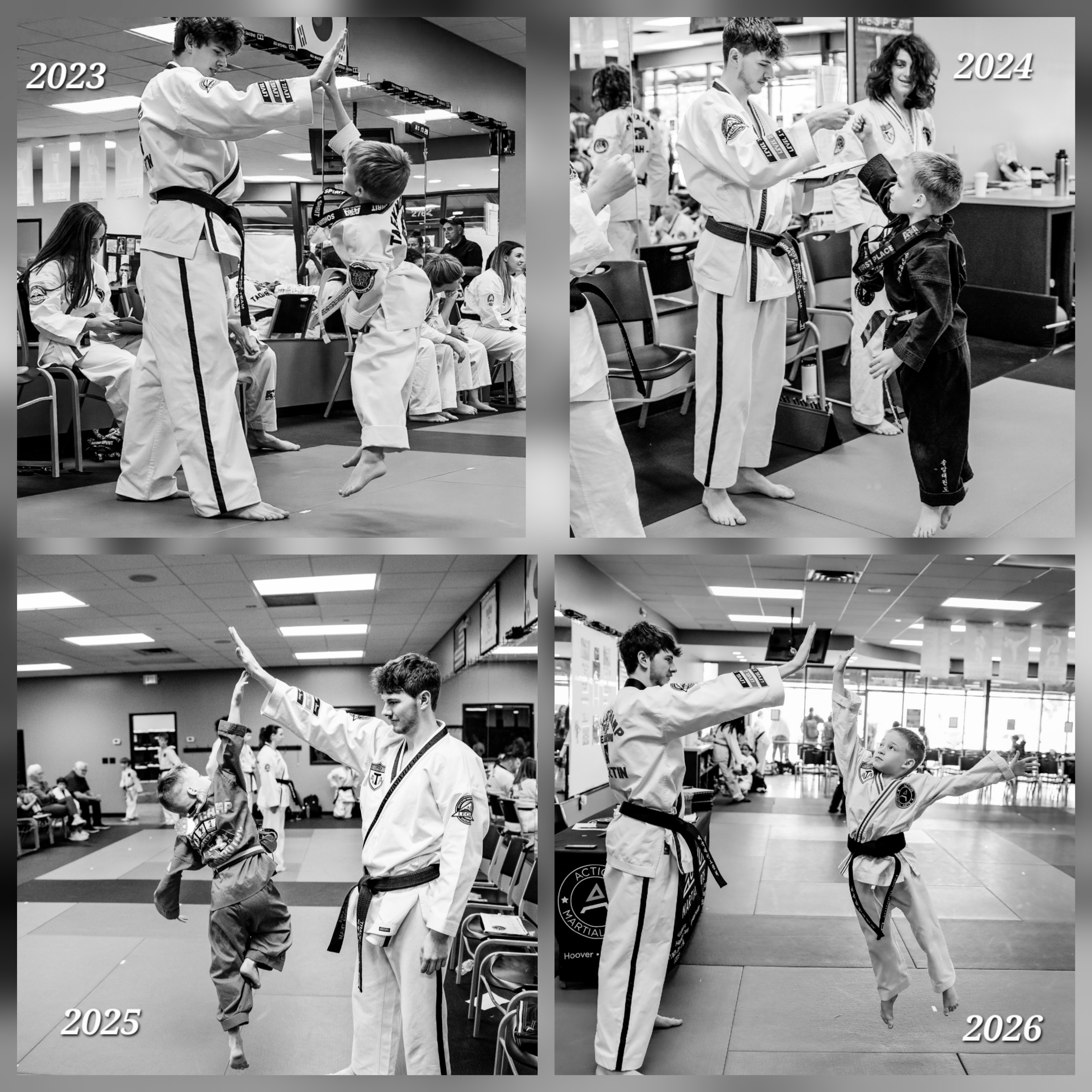
Somewhere in the middle of helping Finn prepare for his black belt test — reviewing the knowledge he’d be quizzed on, timing his 5K, and running through his forms — I found myself pausing to take in the journey we have been on over the last few years.
Something in me shifted, and I knew it was time.
Time to share his story.
I had finally healed enough to do it.
To show his strength.
To show his growth.
To show that even when life feels pitch black — when the darkness feels endless — there is always light somewhere ahead.
But also to show that no matter how much better Finn and I are right now, this path is still rocky sometimes.
And that’s okay.
Life is going to throw you curveballs.
Sometimes those curveballs look like the familiar buzz of another message from your child’s teacher.
Sometimes those curveballs look like unexpected mental health reality checks.
Just a few weeks ago, at his last psychiatry appointment, the doctor asked a question I wasn’t expecting.
“Have you ever seen or heard things you knew weren’t real?”
Finn said yes.
And my heart immediately fell out of my chest.
In an instant I was transported right back to that moment at Children’s when I learned he had been self-harming.
Then he clarified that it hadn’t happened since around the time he was hospitalized.
I took a deep breath as my heart slowly settled back into my chest.
This path we are on will probably never be easy.
But there is light.
Joy.
Hope.

As I stood there Saturday watching Finn work through each part of his black belt test, something dawned on me:
When most people think about earning a black belt, they think about strength and techniques.
Kicks.
Forms.
Breaking boards.
As I watched “Mr. Dorothy” have his newly earned black belt tied around his waist, I felt a rush of pride and relief.
Pride in seeing just how much his hard work had paid off.
Relief that he had passed — several of his friends hadn’t.
Because, for Finn, the hardest thing he had to learn wasn’t how to spar.
It wasn’t learning a perfect back stance.
It wasn’t mastering a 360 bo staff toss or memorizing the names of every Grand Master.
It was learning how to breathe.
How to pause.
How to sit inside big emotions without letting them take over.
That’s the kind of strength you can’t earn in a dojang.
But somehow, Finn managed to do both.
The same kid who once asked if the doctors were there to “fix his brain” was now standing on a mat, earning his black belt.
When Finn walked off the mat after testing ended, I expected him to come straight toward us.
But for a moment I couldn’t find him.
When I finally spotted him, he had his arm around a friend who hadn’t passed.
While everyone else was celebrating, Finn was quietly walking beside him, comforting him.
Watching him walk beside his friend that day, something became clear:
The belt wasn’t the most important thing he earned that day.
It was never even about his belt.
It was about his journey.
In Songahm Taekwondo, the belt system is represented by the life of a pine tree.
A seed is planted.
It reaches for the sun.
It becomes a sapling, fighting for space among the taller pines.
Its path becomes steeper as it grows stronger roots.
Eventually the tree reaches maturity — standing tall and strong.
And when it does, it begins planting seeds of its own.
Finn’s journey followed that same path.
My little seed did grow.
He found the sun.
He became a sapling and fought his way among the taller pines, bending through storms no child should have to face so young.
His path became steeper than anyone could have predicted, but he kept reaching upward, deepening his roots along the way.
And somewhere along the way, the pitch black that once surrounded us slowly gave way to morning.
I got to witness that sunrise after Districts in 2025.
Now his tree stands strong.
Ready to weather storms.
Ready to plant seeds of hope for others who may still be standing in their own darkness.
Watching him walk beside his friend that day, I realized something I hadn’t understood before.
The storm we survived didn’t just teach Finn how to endure the dark.
It taught him how to recognize it in others.
And in that moment, the darkness no longer felt endless.
He didn’t just survive the pitch black.
He learned how to be light for someone else still standing in it.
If you’re a parent walking through your own version of Pitch Black right now— I see you. Your dawn will come too.

A Letter To Finn
Author’s Note
Before publishing this piece, I wrote Finn a letter and we read the entire story together.
It was important to both of us that he felt seen, heard, and represented in a way that felt true to his experience too.
We cried a little while reading it.
Then we hugged.
This is his story as much as it is mine. And more than anything, I hope it helps him see just how strong he is, how far he has come, and how much hope his journey might give to others walking a similar path.
For those who are curious, this is the letter I wrote to him.
For Finn
You don’t have to remember everything about that week.
Honestly, part of me hopes you don’t.
But I do want you to know this:
You were six years old and fighting battles most people don’t face in a lifetime.
And you fought.
You kept talking.
You kept trying.
You kept showing up.
That strength didn’t appear out of nowhere.
It was always in you.
And if there is one thing I hope you never question, it’s this:
Your mom was right there with you.
Even when I was terrified.
Even when I felt like my soul was breaking.
Even when I walked out of that hospital without you and thought my heart might actually stop beating.
I never stopped fighting for you.
Not then.
Not now.
Not ever.
Because loving you was never the hard part.
It was the easiest promise I ever made.
